After
spending fall and winter working a stressful job in Texas, recalling memories
of my previous Alaskan summer, it was time for an adventure. Beginning spring in Montana had been a time
of rejuvenation for me; exactly what the season should be. With the Mountain Bluebirds investigating
nest boxes, pairs of ducks swimming in roadside streams side-by-side, and
Western Meadowlarks singing across fields and atop fence posts, I knew it was
time to make the longer leg of my own migration up to Alaska.
We started our drive up north on
March 31st from Colstrip, Montana, through the dry, golden plains
filled with pheasants, Pronghorn, and other wildlife, alongside the Crazy
Mountains, towards Kalispell and Whitefish.
We crossed the US-Canada border at Eureka, MT and Roosville, British
Columbia on April 2nd, full of excitement and a little anxiety at the
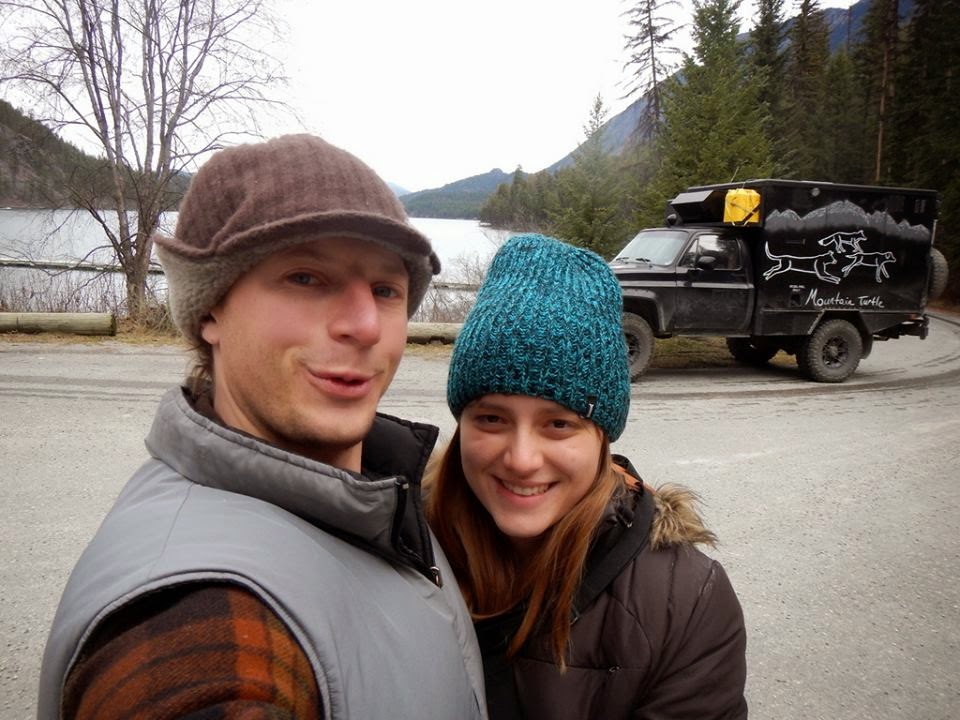
almost certain inspection of Steve’s 1 ton Chevy converted military expedition
truck. After 15 minutes of sitting in
the border patrol office, the only contingency to enter Canada was to walk our
eggs back into the US (to help prevent the spread of Avian Flu), where a fellow
American gladly took them home.
Within the first half hour of
entering Canada, we saw hundreds of Elk and Mule Deer grazing, two Wild Turkey
toms displaying for a group of females- their iridescent, striped, bronze
retrices (tail feathers) erect, and 3 Bald Eagles and 10 Common Ravens feasting
on a deer carcass, all with the backdrop of giant, jagged mountains. This was definitely how I had imagined ‘The
Great White North’.
The next days and weeks were filled
with more wildlife and mountains. We
traveled through Kootenay National Park, taking a relaxing dip in the hot
springs there, as well as through Banff and Jasper National Parks. Mountains towered over us on both sides of
the road, each turn offering a different visual perspective, while
simultaneously bringing into perspective my small size in comparison to the
vast landscape surrounding me. I saw my
first glacier- mysterious, powerful, and blue.
Common Goldeneye drakes fought over a female at Premier Lake, splashing
and biting each other. Varied Thrushes sang
their low, echoing one note songs every morning in the dense forest, easily
heard but not seen. Herds of Bighorn Sheep
walked the rocky ledges along the side of the road. White-tailed Deer bounded between rock faces
and forest. We saw three moose at a
great distance, and knew we would see more.
A Common Raven examined the animal mural on our vehicle, inquisitively
tilting his head and walking along the side like a human at an art
exhibit. Several Clark’s Nutcrackers
flew back and forth across the Lake Louise parking lot in Banff; I pondered
their amazing memory and wondered if they had cached any seeds nearby.

Banff National Park
Young Bighorn Sheep
Common Raven examining our vehicle.
Clark's Nutcracker
Glacier in Jasper National Park
Following Smithers, BC, we began
driving the Stewart-Cassiar Highway.
This is where our adventure took an unexpected turn; one of our vehicles
began smoking and we had to be towed back into Smithers. The next several days were an attempt to
unravel the mystery, the answer to which was likely a faulty PVC valve. From a positive perspective, this gave us an
opportunity to experience an interesting cultural difference between Canada and
the US: bowling is played with 5 rather than 10 pins, and small, 2 lb (?) balls. We also had delicious 'Boston Pizza' and Cadbury Crème
Egg Milkshakes at McDonald’s, which are unavailable in the US. Back on track, we ventured on, through
Stewart BC and briefly into Hyder, Alaska!
It felt wonderful to step back into
the US again, and to set foot in Alaska, the land I fell in love with for its
wilderness, mystery, and opportunities for adventure. I can feel its essence on the cold air that
fills my lungs, making my heart pound faster.
We are greeted by a Bald Eagle (how fitting!), along with a few Harbor
Seals, which silently and cautiously watch us with their dark eyes and heads
only slightly above water. The remainder
of the day is spent driving a snowmobile trail up into the mountains a little
ways, and then fighting off (shockingly) swarms of mosquitoes while cooking
dinner.
Bald Eagle in Hyder.
Harbor Seal, picture taken at the Alaska SeaLife Center in Seward, AK.
Before we left to drive the next
leg of our journey to Whitehorse, Yukon, I was able to bird in our campground,
where a Beaver, unhappy about my presence, defensively slapped his tail against
the water, while simultaneously two Belted Kingfisher males chased one another
around the same pond, each trying to claim it for his own. I saw two new life species (a species seen in
the wild for the first time by me) that morning back in Stewart. Let me first say that these are special
moments, filled with excitement and a little disbelief over laying eyes upon a
creature for the first time.
Chestnut-backed Chickadees, with a bold appearance to match their bold
personalities, appeared to tumble from branch to branch, foraging on pine
nuts. They are charming little
birds. A short walk away, loud squawks
came from an unseen and unfamiliar Corvid.
“Could it be? Finally?”
I had wanted to see a Steller’s Jay for a very long time. The crested black head and brilliant blue
body of a large bird bursting from the trees confirmed. The next 20 minutes were spent delightedly
observing a group of 10 or so jays foraging and calling to one another.


Steller's Jays
That eighth day of our journey was
a long one, but not without exciting moments.
Not far from Stewart, two moose waded in a river and a third stood on
shore. We were able to observe them from
a pull-off nearby. I eagerly watched the
largest member of Cervidae (the deer family), contemplating their large hooves,
adapted for walking through snow and bogs, and large snouts, containing nostrils
that close underwater due to the pressure differential, preventing water from
entering while feeding. Later on,
another life species, the Ruffed Grouse, crossed the road in front of us just
after we passed over the Stikine River.
It was easy to lose sight of once off the road because of its remarkable
camouflage. Males of this species make a
drumming sound by moving their wings forward and back, creating a vacuum.
Can you spot the Ruffed Grouse?
Still attempting to resolve the car
difficulty, we drove well into the night in an attempt to reach Whitehorse as
quickly as possible. Soon after darkness
fell, bright columns of green and yellow appeared in the sky- the Northern
Lights, or Aurora borealis! I was filled with awe as I watched the colors
spread across the sky in constant flux.
Changing within seconds and strengthening over the course of several
hours, the lights were truly sublime, and more incredible than I could have
ever imagined. Seeing something so amazing,
that I had longed to see my whole life, was spiritual and humbling. Words fail to describe the experience beyond
that.
I didn't take a picture myself, but here is one I found on Google from the same area.
We reached Whitehorse the next day,
ran a few errands, and relaxed in Takhini Hot Springs. A good soak was needed after banging my head
on the refrigerator, excitedly scrambling to the front of the truck to see
caribou crossing the road that morning. A remarkable
circumpolar (found around the Earth in the vicinity of the North Pole) species,
Caribou (also known as Reindeer when semi-domesticated), specialize on eating
lichens, have hollow outer hairs which hold air and help warm the animal, have
large hooves for moving over tundra and snow, and are migratory. It is always a pleasure to see this species
in the wild, as their populations are currently declining.

The next day we had the misfortune
of shearing some lugnuts off our left back tire. However, the situation was not completely
hapless, as we were not far from Whitehorse, and were able to pull off the road
and quickly find parts. We camped out
near Destruction Bay on the ALCAN (Alaska-Canadian Highway), named for a storm
that nearly destroyed a town established for building the highway. The next morning we woke up excited to enter
Alaska soon, and listened to John Denver’s “Alaska
and Me” multiple times. I smiled as
I could relate to the song, being so interested in the state as a child that I
wrote a report on it in elementary school.


We entered Alaska around noon, but
not without friendly hassling regarding our strange vehicle. Rather than poultry, this time we had to
surrender our Clementinas, to
prevent possible transmission of non-native insects. We passed by Tetlin National Wildlife Refuge
and were continuously surrounded by beautiful scenery. Our first stop was Jennifer’s Thai, a food
bus in Tok, AK. As we waited outside, I
realized I was finally acclimating to decreased temperatures, as ~45°F felt
comfortable. Common Redpolls sang their
buzzy songs in the trees all around. We
drove through Bear Valley and saw the mighty peaks of Wrangell- St. Elias
National Park and Preserve. A moose
crossed the road in front of us and was quickly lost in dense pines. A colorful Spruce Grouse male walked the
opposite side of the road, and curiously approached the truck instead of flying
away when we doubled back, allowing for great pictures. We camped out that night at a different Lake
Louise near Glennallen, AK.


Wrangell-St. Elias National Park
Common Redpoll
Spruce Grouse
The next day we set off for
Anchorage. We were stopped at a pull-off
to examine maps and check the status of our vehicles that morning, when a flash
of red, white, and black caught my eye. The
elongated, curved mandibles crossing over one another, it was recognizable
immediately as a White-winged Crossbill!
Another exciting life species!
Crossbills are specialists with bills adapted for extracting and
consuming conifer seeds; they are only found in coniferous forests. We made a brief stop in Wasilla, where we
bought a used Zodiac boat! We made it into bustling Anchorage
around 3pm. It is strange traveling
through a large city where skyscrapers sit next to the ocean, and mountains
form more of the backdrop. We dined on
Moose’s Tooth Pizza, which is delicious, and camped out at beautiful Eklutna
Lake.
White-winged Crossbill female
It is a welcome surprise to wake up
to large mountains and other unseen scenery when you arrive at a campground at
night. The ice on the lake was melting,
and so we heard the strange, echoing sounds of cracking ice on a water body. We also birded for a bit, finding ravens,
redpolls, chickadees, a Downy Woodpecker, and a Red-breasted Nuthatch. We headed for Seward on the Kenai Peninsula soon after.
We drove along Turnagain Arm,
looking out towards Cook Inlet. Sheer
rock faces towered above us to the left, angry waves rolled and crashed against
rocks in the inlet to our right, and more mountains stood boldly on the other
side of the inlet. I scanned the
mountains above us, knowing that Dall Sheep are commonly seen here. With the lack of snowfall the west has
experienced, a white figure moving amongst the rocks was easy to see. I watched the graceful creature climb amongst
rocks with ease through my binoculars and camera. Alaska is the only US state Dall Sheep can be
found in; it was a special moment to see this new life mammal that thrives in
cold, steep, rocky areas.

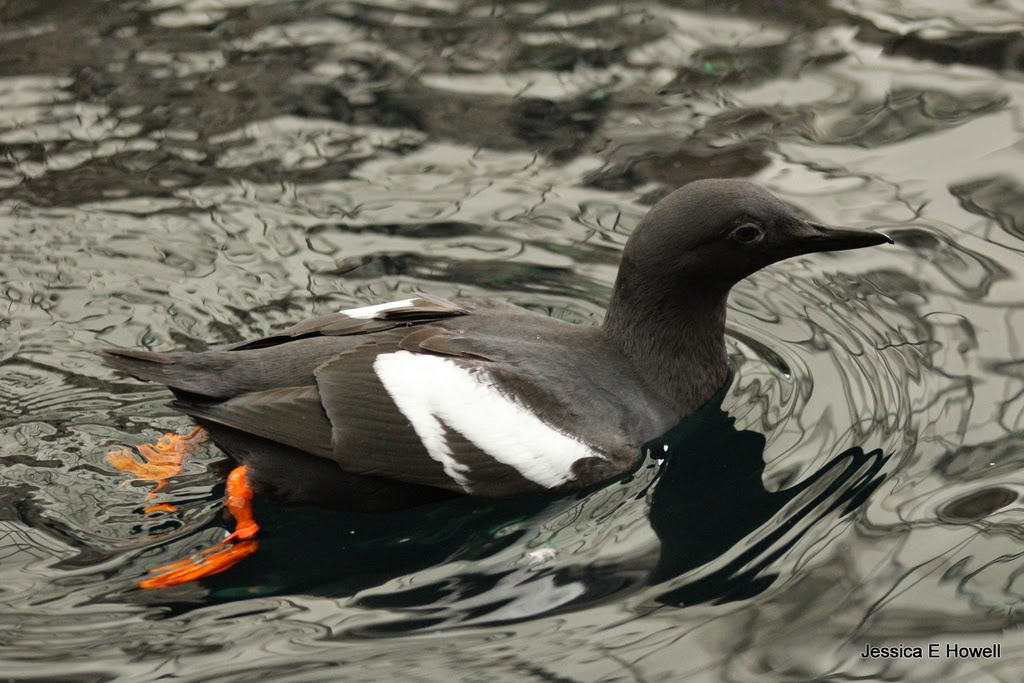
We drove through rain, then heavy snow, then rain again, reaching Seward several hours later. Seward is a delightful little seaside town, sleepy when not in tourism season. At the far end of town, gulls floated in the water, awaiting a fishing ship perhaps. Upon closer examination, I noticed Common Murres and a Pigeon Guillemot in the mix. The other FWS seasonal employees I worked with last year had studied a Common Murre breeding colony at Puale Bay, which was heavily impacted by the Exxon Valdez Oil Spill. It was nice to see this species again.
Common Murres in a sea of gulls.
Pigeon Guillemot at the Alaska SeaLife Center.
We drove to another beach access road further down. I saw what I thought was a log, but as I walked closer, I noticed it had limbs and was turning in the surf. I had never seen a Sea Otter so close, so I hadn't realized how big they are! We watched it float and feed on clams, dive, and repeat. It was wonderful to watch this animal so closely, and I imagined it swimming through tall kelp forests, grabbing sea urchins for meals. As I will discuss in a later blog, this is an endangered species, so it is encouraging and a privilege to see in the wild. Nearby, a beautiful raft of Harlequin Ducks, males in full breeding plumage, along with a few Barrow's Goldeneyes floated in the waves. Our first evening in Seward was filled non-stop with wildlife! We walked along the beach more. Suddenly a large, slender head and neck popped out of the water, curiously watching us. Three more joined, dove, and popped up again nearby. They were Steller Sea Lions, the largest sea lion species, and also one that is classified as "Near threatened" by the IUCN (watch for same later blog). Their curiosity and playfulness (even after we were in our truck driving away they followed us) reminded me of their Galapagos cousins that I had swam with in a very different ecosystem. Sea Lions are delightful animals to interact with!

Sea Otter with clam.
Duck Raft, mostly Harlequins but with Barrow's Goldeneye pair at top right.
Harlequin Duck drake, picture taken at the Alaska SeaLife Center.
Steller Sea Lions
The next day we visited the Alaska SeaLife Center and briefly hiked into Kenai Fjords National Park to see Exit Glacier. The Alaska SeaLife Center is a wonderful rehabilitation, education, and conservation organization. I had wanted to visit this place in part because the wildlife refuge I worked for last summer partners with them. We watched a pair of King Eiders court, a large Steller Sea Lion male bellow, and saw numerous other marine creatures. Exit Glacier was beautiful, and it was remarkable how much the glacier had receded over past century (there were markers showing). We spent the remainder of the evening walking on the beach, watching the sun set over the mountains and water, looking for sea shells and sea creatures. Seward is a nice place.
King Eider Drake
Courting King Eider pair.
Tufted Puffin
Horned Puffin
Us at Exit Glacier.
Sunset in Seward, AK.
The next day we traveled to Kenai and Soldotna, passing through Kenai National Wildlife Refuge along the way. We didn't see much wildlife besides a few waterfowl, but we were able to do errands, find a nice campground, and drive on the beach the next morning. Our last stop on the Kenai Peninsula before heading back to Anchorage was Homer. It was dismal, rainy weather when we arrived, but we made the best of it. We stopped at a wetland overlook, where we saw some Mallards and more White-winged Crossbills. As we began driving back to the main road, we saw two moose, one on each side of the road, watching us! We slowly drove by them and were able to quietly observe and take pictures. We used the remainder of the evening to visit the Salty Dawg Saloon (a famous little bar with a big personality on the Homer Spit) and find some fish and chips to satisfy a grease and salt craving. We camped out at Anchor Point, right on the beach.


Our second day in Seward was spent partially at the Alaska Islands & Ocean Visitor Center, operated in part by Alaska Maritime Wildlife Refuge, which has impressive natural history and cultural exhibits and was a nice relief from the cold wind and rain. We walked down to an estuary and Bishop's Beach, where among other birds I saw a Eurasian Wigeon for the first time! We also hiked the Diamond Creek Trail, where we saw another Moose on the way in, and over 20 Sea Otters when we reached the beach. With large rock faces and civilization not visible from the bottom of the trail, the beach looked like wilderness. It was beautiful.
End of Diamond Creek Trail, Homer, AK
It was a very low tide the next morning, so before we headed back to Anchorage the next day we went 'tidepooling' and found sea stars, anemones, crabs, and a small amphipod (shrimp-like crustacean). Northwestern Crows and Bald Eagles were tidepooling as well, although for a very different purpose. We camped out near Portage Glacier in Chugach National Forest that night. The weather was poor but it was a very beautiful place. I saw the glacier and lake but do not have any pictures because it was so rainy and windy. On our way along Turnagain Arm again we saw more Dall Sheep, and a Beluga Whale for an instant. This trip had offered amazing scenery and wildlife.
Anchor Point, AK
Sea star found while tidepooling.
I will skip over the rest of our trip, as the remainder was spent running around Anchorage. Below I have compiled tables of the mammal and bird species we saw on our trip- 17 mammals and 51 birds. Starting March 31st from Colstrip and ending April 21st, when we flew to King Salmon from Anchorage, this has been the longest continuous trip I have been on. I had wanted to see more of Canada beyond the Niagara Falls area I had been to before, and the idea of driving to Alaska had been a dream of both Steve's and mine. It has been an adventure, with both triumphant and frustrating moments, but overall fantastic! To be in such beautiful surroundings, experiencing new ecosystems and species, and all with good company lifts the heart and soul.
Mammals
|
|
Common Name
|
Scientific Name
|
White-tailed
Deer
|
Odocoileus virginianus
|
Mule Deer
|
Odocoileus
hermionus
|
Elk
|
Cervus canadensis
|
Moose
|
Alces alces
|
Caribou
|
Rangifer tarandus
|
Pronghorn
|
Antilocapra americana
|
Bighorn Sheep
|
Ovis canadensis
|
Dall Sheep
|
Ovis dalli
|
Black-tailed
Prairie Dog
|
Cynomys ludovicianus
|
American Red
Squirrel
|
Tamiasciurus hudsonicus
|
Coyote
|
Canis latrans
|
Red Fox
|
Vulpes vulpes
|
American
[Pine] Marten
|
Martes Americana
|
Sea Otter
|
Enhydra lutris
|
Steller Sea
Lion
|
Eumetopias jubatus
|
Harbor Seal
|
Phoca vitulina
|
Beluga Whale
|
Delphinapterus leucas
|
Birds
|
|
Common Name
|
Scientific Name
|
Common Loon
|
Gavia immer
|
Trumpeter
Swan
|
Cygnus buccinator
|
Tundra Swan
|
Cygnus columbianus
|
Canada Goose
(Dusky)
|
Branta canadensis
|
Greater
White-fronted Goose
|
Anser albifrons
|
Mallard
|
Anas
platyrhynchos
|
Northern
Pintail
|
Anas acuta
|
American
Wigeon
|
Anas americana
|
Eurasian
Wigeon
|
Anas penelope
|
Green-winged
Teal
|
Anas crecca
|
Greater Scaup
|
Aythya marila
|
Harlequin
Duck
|
Histrionicus
histrionicus
|
White-winged
Scoter
|
Melanitta fusca
|
Barrow’s
Goldeneye
|
Bucephala
islandica
|
Bufflehead
|
Bucephala albeola
|
Common
Merganser
|
Mergus
merganser
|
Red-breasted Merganser
|
Mergus serrator
|
Red-tailed
Hawk
|
Buteo
jamaicensis
|
Bald Eagle
|
Haliaeetus leucocephalus
|
Gyrfalcon
|
Falco
rusticolus
|
Ring-necked
Pheasant
|
Phasianus colchicus
|
Spruce
Grouse
|
Falcipennis
canadensis
|
Ruffed Grouse
|
Bonasa umbellus
|
Wild Turkey
|
Meleagris
gallopavo
|
Sandhill
Crane
|
Grus canadensis
|
Mew Gull
|
Larus canus
|
Herring Gull
|
Larus argentatus
|
Glacous-winged
Gull
|
Larus
hyperboreus
|
Common Murre
|
Uria aalge
|
Pigeon
Guillemot
|
Cepphus columba
|
Short-eared
Owl
|
Asio flammeus
|
Belted
Kingfisher
|
Ceryle alcyon
|
Downy
Woodpecker
|
Picoides pubescens
|
Steller’s
Jay
|
Cyanocitta
stelleri
|
Gray Jay
|
Perisoreus canadensis
|
Clark’s
Nutcracker
|
Nucifraga columbiana
|
Black-billed
Magpie
|
Pica hudsonia
|
Common Raven
|
Corvus corax
|
Northwestern
Crow
|
Corvus caurinus
|
Black-capped
Chickadee
|
Poecile
atricapilla
|
Chestnut-backed
Chickadee
|
Poecile rufescens
|
Red-breasted
Nuthatch
|
Sitta
canadensis
|
Mountain
Bluebird
|
Sialis currucoides
|
Varied
Thrush
|
Ixoreus
naevius
|
American
Robin
|
Turdus migratorius
|
Song Sparrow
|
Melospiza
melodia
|
Dark-eyed
Junco
|
Junco hyemalis
|
Snow Bunting
|
Plectrophenax
nivalis
|
White-winged
Crossbill
|
Loxia leucoptera
|
Common
Redpoll
|
Carduelis
flammea
|
Hoary
Redpoll*
|
Carduelis hornemanni*
|